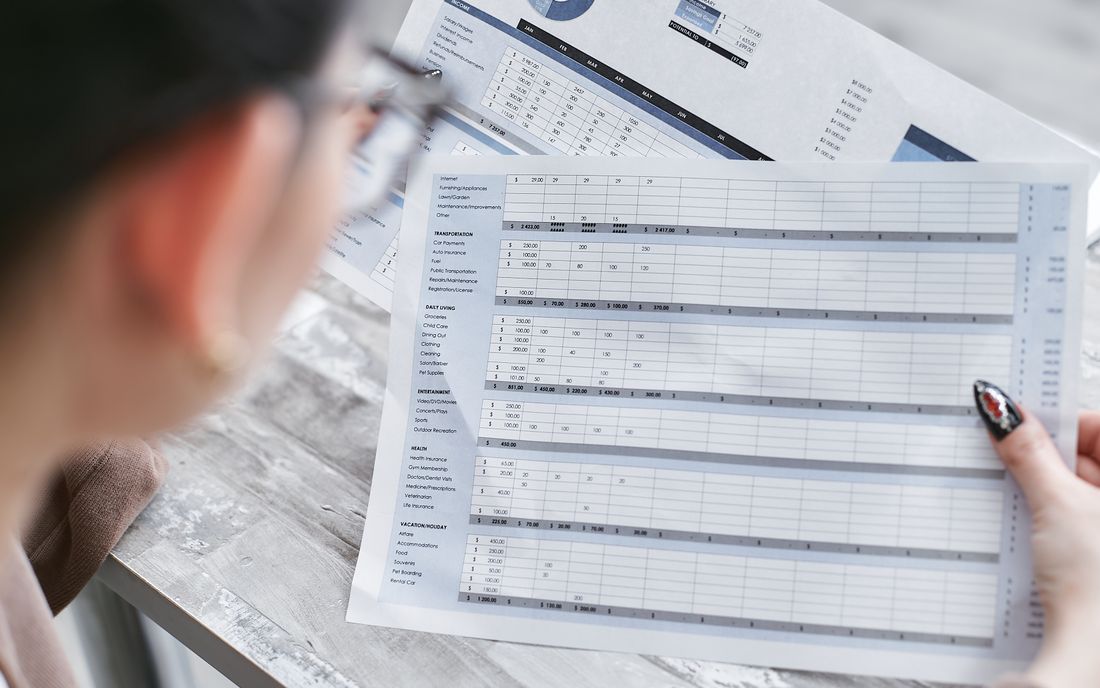
A revision log: why keep one
Keeping all checks in one place lets you compare results and see trends.
A homeware business runs three branches. A revision takes place twice a year, but the results are scattered: one in a Word file, one on the manager's phone, one in the accountant's folder. At year-end the owner asks, "Are shortages going down or up?" Nobody can say for sure, because the results are not in one place and were not recorded in one form. That question is answered by a revision log.
What a log is, and what it is not
A log is a single list of all checks: every revision, recount and mini-check takes one row. It does not replace the report. The report tells the story of one revision in detail; the log gathers all revisions in a short form that can be compared. It answers three questions: is the gap growing, where does it appear most, and did the actions work.
Which columns you need
Do not add many columns: past twelve, nobody fills the log in. This set is usually enough:
- date, the place checked (branch, warehouse, zone) and the type of check: scheduled, surprise, recount, sample;
- the committee chair and the turnover for the period checked, in so'm;
- shortage and surplus amounts separately, and the shortage as a percentage of turnover;
- the main cause group and up to three positions with the largest differences;
- the action agreed, the person responsible, the deadline and a "done" mark;
- the report number and where it is kept.
An Excel table is enough. If the log is on paper, number the pages and bind them. The main rule: entries are never erased; a mistake is fixed by a new row with a note. A revision with no shortage is also a result, so record it too.
An example: three branches, four quarters
With illustrative figures, the log showed this:
- Q1: turnover 240 million, shortage 1.9 million so'm, or 0.8 percent;
- Q2: 255 million and 2.3 million, or 0.9 percent;
- Q3: 250 million and 3.5 million, or 1.4 percent;
- Q4: 262 million and 5.0 million, or 1.9 percent.
In so'm the growth was hardly noticeable, but the percentage series gave a clear trend: within a year the shortage share more than doubled. The "place" column pointed to the second branch, and the "positions" column showed crockery sets recurring three quarters running: the books held them as sets, the warehouse as single pieces. No single report would have shown this.
Two actions went into the log: a single unit of measure for crockery sets (two weeks, owner: the storekeeper) and a monthly mini-count in the second branch. At the next revision those two rows are checked first: whether the actions worked, the figure itself will tell.
What to do with the log
- hold a twenty-minute review with the manager every quarter: is the share rising, are the actions being done;
- mark recurring positions and places as a sign of a systemic problem;
- highlight actions that are past their deadline;
- read the last three entries before a new revision, so the committee knows where to look;
- set your own internal threshold, for example one percent of turnover: if the shortage share goes above it, the next check is widened rather than trimmed.
Who keeps it, and how to start
Appoint one person: an internal controller, the accountant or the warehouse manager. Restrict editing and give management view access. The person responsible for the stock should not keep the log, because the party being checked does not write down its own results.
Starting is easy: open the last two or three reports and copy their key figures into the log by hand. The log immediately gets a baseline, and the next revision can be compared against it. The commonest mistake is filling the log once a year from memory: it then holds a date but no cause and no action. Fill in the row in the same week the revision ends, or nobody will.
Conclusion
A single revision shows one moment; a log shows the whole road. Identical columns and tidy upkeep help you see the trend and keep actions under control. The Reviziya team can help you fit the log's structure to your warehouse.