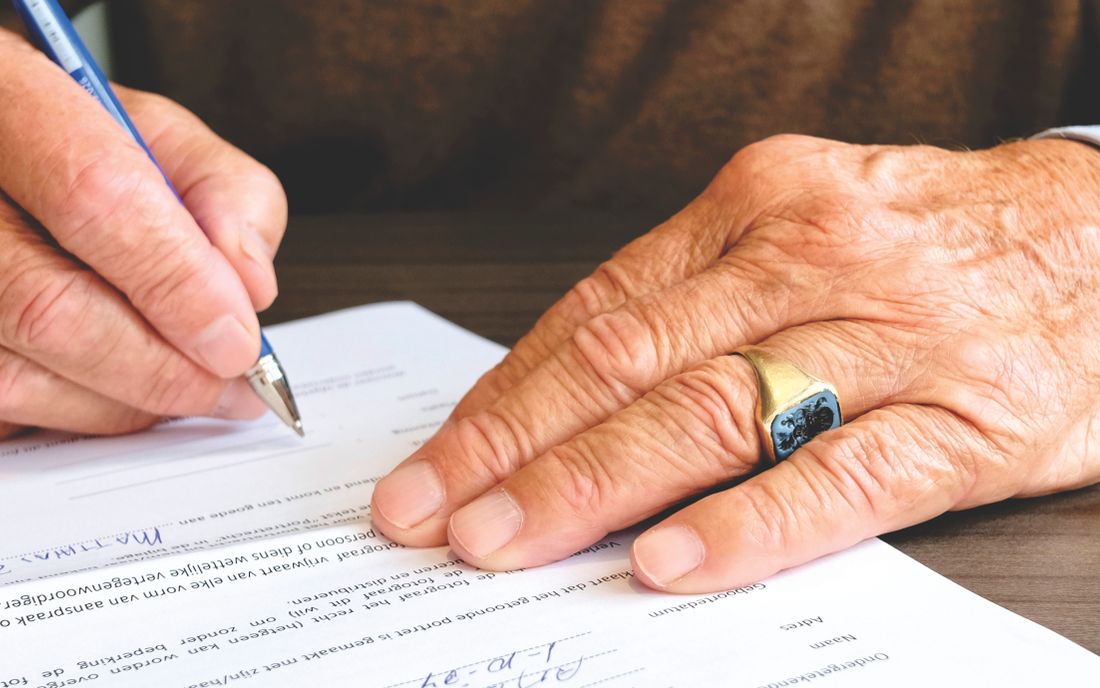
Source documents: what a revision checks against
Receipt and issue documents, delivery notes and acceptance reports are the revision's main evidence.
A figure in the accounting program is a result, not evidence. The balance in 1C or an Excel file is the sum of data that somebody entered, and what was entered rests on a document. That is why "the program says so" is not an answer in a revision: for every number the committee asks for the original document behind it. Such documents are called source documents, and they are the foundation of the whole record system.
A figure in the program is a result; a document is evidence.
What a source document is
It is a document created at the moment of a business transaction that confirms the transaction really happened. In a warehouse the main ones are:
- the delivery note, showing that goods passed from one party to another;
- the receipt document and acceptance report, showing what came into the warehouse and how much, with any differences in quantity or quality;
- the issue document, showing what went to a customer, a workshop or a branch;
- the transfer document, covering movement between warehouses or zones;
- the return report, for goods coming back from a customer or going back to a supplier;
- the write-off report, for spoiled, expired or lost goods;
- the power of attorney, confirming on whose behalf goods were collected;
- the electronic invoice, an electronic trace of the goods changing hands.
A good document is complete: number and date, the parties (who hands over, who receives), name of goods, article code, unit, quantity, price and amount, the basis (a contract or an order), and the names and signatures of the responsible people. The form may vary with internal rules, but completeness is a must.
The chain of documents
A single transaction leaves a chain of documents: order, delivery note, receiving, receipt, storage, issue note, customer's signature. The most useful technique in a revision is the three-way match: what was asked for in the order, what was shipped according to the delivery note, what was accepted at receiving. If all three agree, the chain is healthy. Wherever it breaks, the difference was born there.
A hypothetical example. A supplier showed 480 boxes of juice on the delivery note. At receiving the storekeeper counted 462, but did not draw up an acceptance report and passed the note to accounting, which booked 480. The revision found a shortage of 18 boxes: 18 × 54,000 = 972,000 so'm. There is no report in the chain, so no claim can be made against the supplier, and blaming the storekeeper would be unfair. Had one short report been written at receiving, this shortage would never have landed on him.
What a revision checks
- Completeness. Are all the details filled in: date, signature, price, unit.
- Number sequence. Are there gaps or skipped numbers in the register.
- Dates. Is there a big gap between the document date and the posting date, or are documents dated on a day off or on the eve of the count.
- Corrections. Are there erased or overwritten figures, and is the correction confirmed by a signature.
- Signatures. Did the signatory have the authority, and has the power of attorney expired.
- Duplicates. Has the same document been entered twice.
- Price and unit. Does the price match what was agreed and the unit match the order.
The key rule is that checking runs in two directions. From document to goods: the document exists, but are the goods in the warehouse? From goods to document: the goods are on the shelf, but is there a receipt document for them? If you check in only one direction you see half the picture.
Storage, archive and electronic documents
File documents in folders by month and type, scan the important ones and keep the copies elsewhere. The retention period depends on legislation and internal rules, so ask your accountant. Keep documents for the period under revision at least until the check is finished, and longer if there is a dispute.
An electronic document can be a source document just like a paper one, provided its author, date and integrity are clear: an electronic invoice, a delivery note exported from a system, a signed PDF. A photo in Telegram or a message saying "ok, got it" does not replace a document; it is only a trace. Move an agreement made in a chat into an official document the same day, and keep backups: if a computer breaks, a year of records must not disappear.
Conclusion
The quality of source documents sets the quality of a revision: with a complete chain the cause of a difference is found quickly, and with a broken one every shortage turns into an argument. The Reviziya team can help check the chain of documents and point out where it breaks.